
Rebel Chicano Art Font
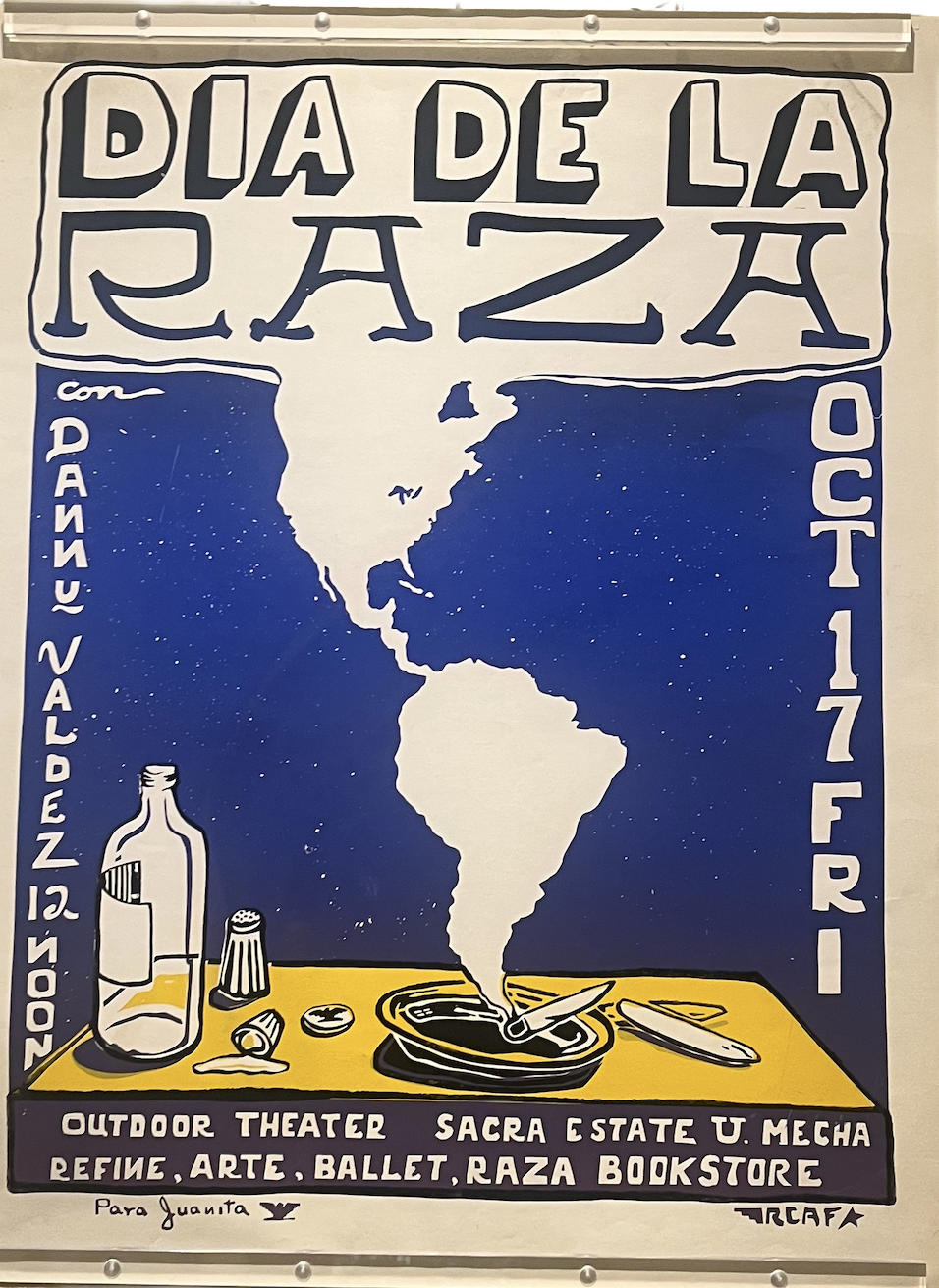
Rebel Chicano Art Font
BY sendy tapia
Humanity has a long history of revolutionary acts against kings, feudal lords, tyrants, and unjust systems. Latin America, Mexico, Chican@s, are no strangers to rebellion either. It doesn’t always involve boots on the ground, violence, or manipulation; often, and I would argue, always, rebellion begins with deliberate choices, especially in art.
Art is inherently political because it reflects and influences societal values, power structures, and cultural norms, either directly or indirectly. The emergence of the vanguard art collective Royal Chicano Air Force (RCAF) exemplifies the social and political tensions during the height of the Chican@ movement through their innovative serigraphs, better known as silkscreen posters. These posters demonstrate how careful decisions can initiate rebellion, even in the form of a backward N.
“Art is inherently political because it reflects and influences societal values, power structures, and cultural norms, either directly or indirectly.”
At first, I thought that it was a way to avoid the tilde atop the Spanish ñ, but its clever use is a visual reminder that art is political. My original analysis led me to believe that the backward N, or ‘Rebel N’, is an example of Rebel Chicano Art Font used by RCAF member Rudy Cuellar. The specific use of the ‘Rebel N’ prompted various questions.
Is it a linguistic nod to Faux Cyrillic reflecting the intensity of the Cold War?
Is it a mirror? An example of visual subversion within Chican@ art echoed in the typography of RCAF silkscreen prints?
Is it an inclusive dyslexic commitment across Cuellar’s artwork? A lived reality for the millions of bilingual speakers who learn how to speak, read, and write the complex English language.
What does it mean to use VOZ in print and art?
As an emerging artist, I don’t know how my artwork fits into the grander scheme of Chican@ creativity, but at least I have relics of artists before me who took up space with art. Remnants of rebellion in a subtle, yet powerful way. It will be my responsibility to continue to encapsulate the societal values, power structures, and cultural norms of my time—one ink stroke at a time.
The RCAF collection can be seen and studied today at San Jose State’s MLK Library archive and will be on display until the end of May. I invite you to check it out and share your theories with me.