
Educational Mirror
Educational Mirror
BY Tatiana Villaseñor
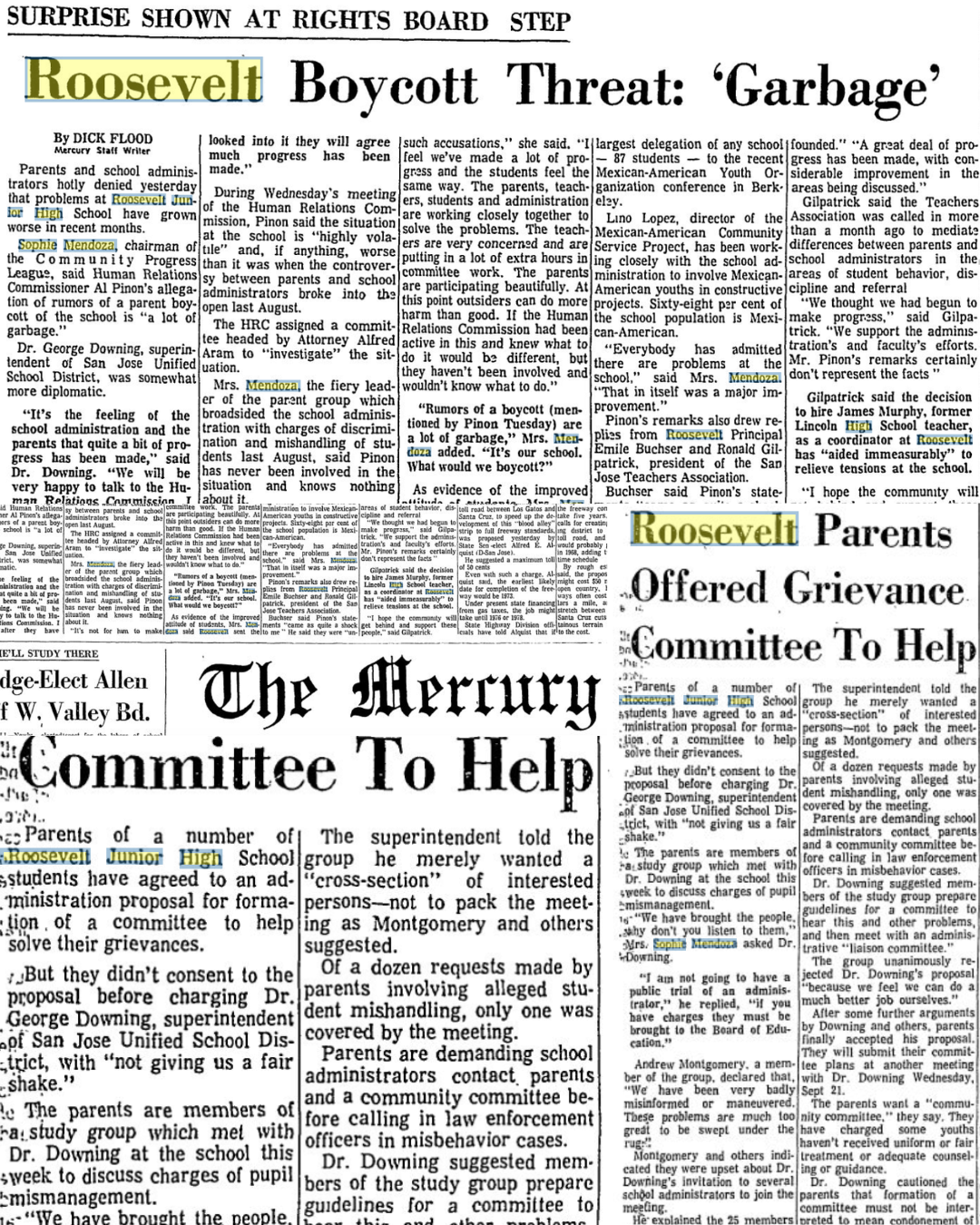
In 1966, the San José Unified School District’s Roosevelt Junior High School was already under public scrutiny. Newspaper headlines documented racial tension, student unrest, and administrative responses. The campus Consuelo Rodriguez returned to in 1967 was not the Roosevelt she had once known as a student—it had become a site of escalating conflict.
History often mirrors itself. Today, SJUSD is once again in tension with the community over the recent decision to close five schools. For many, this raises concerns about whether decisions are being made in alignment with students’ needs and community voice.
What we saw in the 1960s included the dismissal of racism and a lack of meaningful engagement with parents, students, and community members. Today, we are called to respond differently because this moment is complex. Rather than divide us, this invites reflection on how scarcity has shaped our choices and how we move forward together.
Inner-city children, predominantly BIPOC students, deserve smaller class sizes, stronger outcomes, and access to higher education. Educators, like Consuelo, have been calling for student-centered approaches for decades, and we are again at a critical point.
If we look at history, community solidarity has always emerged. This can be a moment of healing by reinvesting in our communities through revitalized teacher centers, youth advocacy, and community hubs.