
Roots That Refuse to Die
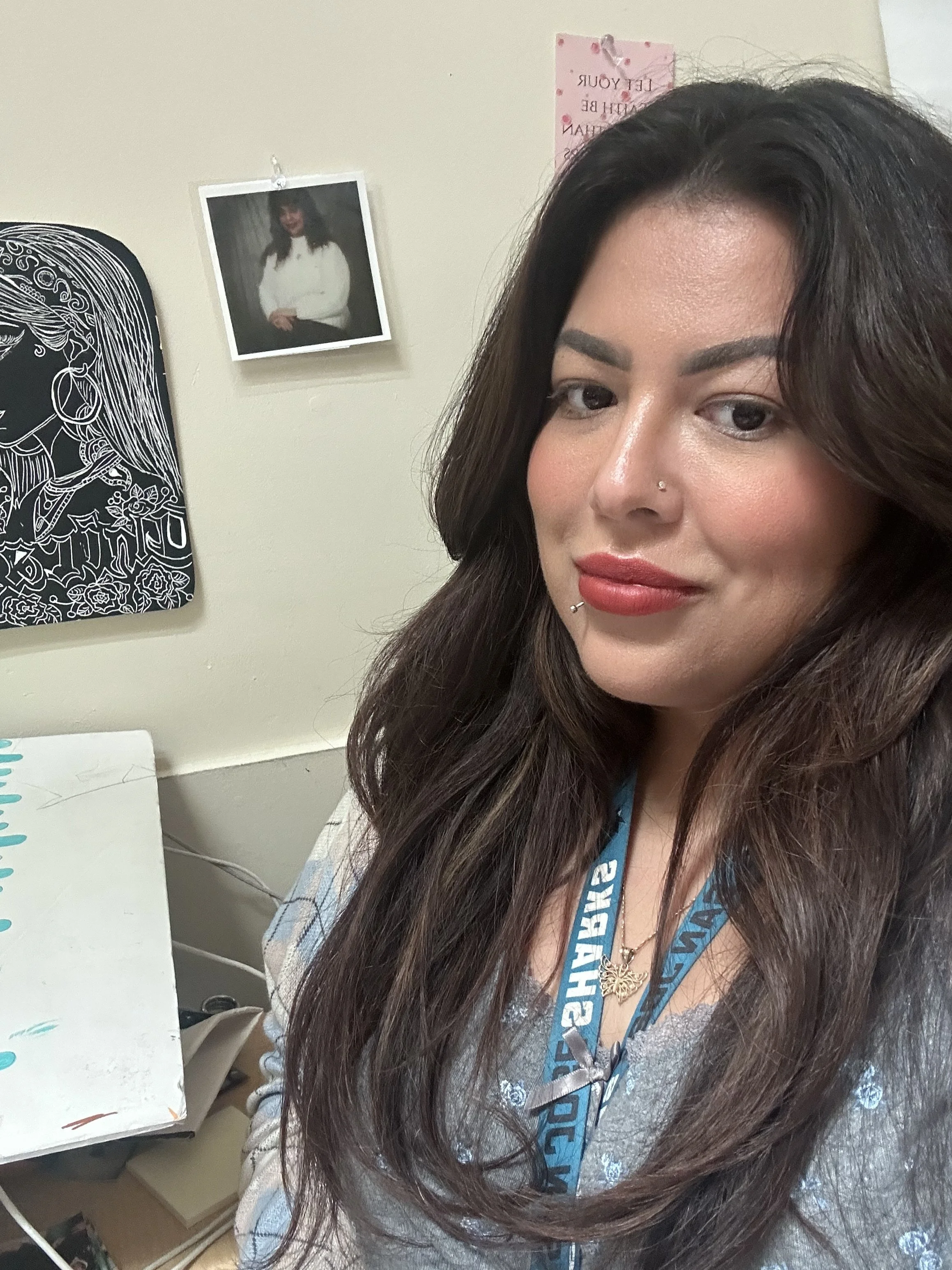
Roots That Refuse to Die
BY Sarah Najar
Like my mother before me, I’ve found my way back to the East Side, teaching in the heart of our community to kids who are growing up just like I did—only with technology at their fingertips! Yet I’ve seen that the education here isn't enough. Our children deserve the right to a proper education, not suppression. With nine schools closed and the district purchasing the ARMS DCP site just months ago, (less than a year after they started the fire that burned through our schools), we must remember this: to bring dignity back to our community, we ourselves must come back—as professionals, leaders, merchants, educators, and healthcare workers—to rise and resist the gentrification breaking down our neighborhoods.
I hear the soul of our cultura in the laughter of the children I teach. In their cynicism, I see the ugly world we face today: raza afraid to go to work for fear of ICE tearing them from their families. Regardless, every day our community rises before the sunlight, gets ready for work, walks their children to school, and goes about their day with dignity. Holding heads high, carrying the courage and valor of our ancestors before us.
“In their cynicism, I see the ugly world we face today: raza afraid to go to work for fear of ICE tearing them from their families. Regardless, every day our community rises before the sunlight, gets ready for work, walks their children to school, and goes about their day with dignity. ”
In the days we’re fighting our toughest battles, we fight not for a king, but for our community—for our gente. To preserve our dignity and pass it on to the next generation of East Side children. We must continue to unite and encourage our community to return, pass on their lessons, and thrive here. This little piece of the world is ours by birth, by indigeneity, through immigration, through seeds we buried and the roots they established, and lastly by God. Let none of us forget that, through community, we are diverse, living with our neighbors in harmony, and that means standing together.
San José would not be here without us. We are the largest part of San José. We define the style, the language, and the fit through creativity, art, music, and community events. My grandparents worked the plum fields on South White Road before buying their first home. My tías and grandmother worked at Del Monte. My mother and her family immigrated here and did the same. Rather than leave or be pushed out, we stayed.
“San José would not be here without us. We are the largest part of San José. We define the style, the language, and the fit through creativity, art, music, and community events.”
On the East Side, we offer what we have even when we barely have enough for ourselves—because we are inherently beautiful. The East Side is a space of perseverance. We can’t let them take it from us.
From a house fire and homelessness to a warm bed and food, our stories build the future. I was that kid with a chip on her shoulder, big hoops, and an even bigger attitude. Teachers didn’t care about me, and guess what? I’m still here. Same hoops, big attitude, and a voice for my people. The “super senior.” The little girl who looked up to the cholas because la raza was strong.
Soy de aquí y de allá. I’m Chicana and proud, and that’s the foundation I will create space for. It starts with roots we established that may seem dormant, but they blossom every spring. Defend the sacredness of the EastSide, come back and serve.
This is how we fight oppression and gentrification. That’s how to let them know they can’t take our children’s education.