
Joy Waits For Me
JOY WAITS FOR ME
BY Jaime Gallardo
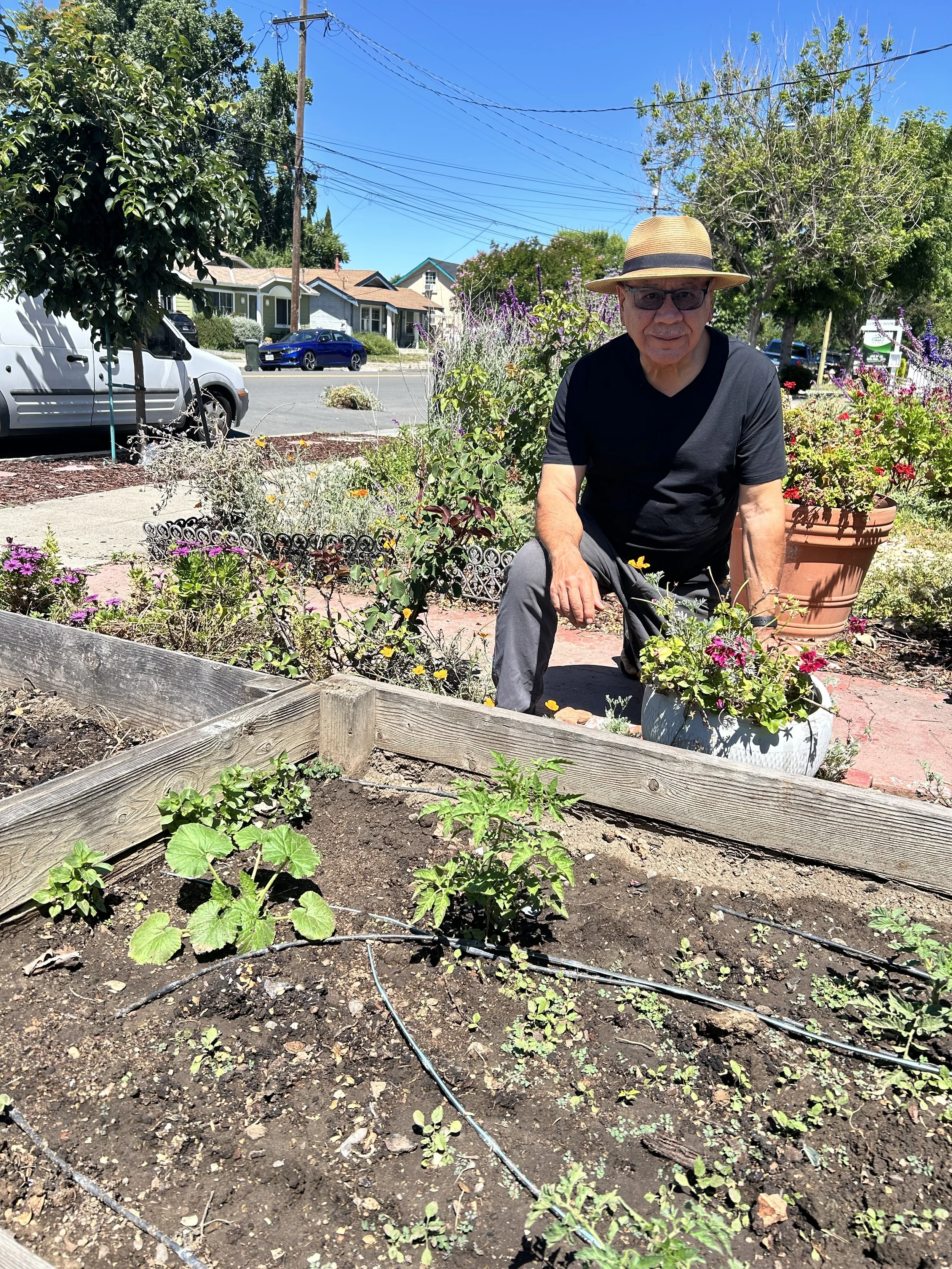
Before I have my first stiff cup of coffee I walk out to my front yard to visit my garden. It is not a large garden— just a humble four-by-eight raised bed that sits along the sidewalk, sniffed by dogs and picked by birds. Lately, it has become the center of my world.
The tomatoes are the first thing I check. Overnight they seem to change, stretching themselves toward the sky with a quiet insistence on life. The zucchini leaves open wide, giant hands that call me. The kale stands sturdy without a care, while the beans wind their way through the mesh support knowing they can’t grow without help.
I water them slowly, carefully. Sometimes I talk to them. I tell them they’re doing well. I apologize when I forget to water them the day before during one of those hot Santa Clara Valley afternoons when the sun presses down on the back of my neck. Even if I neglect them, they keep going. Their leaves droop for a while, then rise again by morning. Their resilience makes me hopeful.
For forty years I was a lawyer. Days filled with conflict, deadlines, grief, anger, and the constant pressure of solving other people’s problems. Phone calls carried urgency. Clients arrived carrying fear or disappointment or rage. I spent decades listening to stories of broken families, failed promises, injuries, betrayals, and loss. Even a victory was exhausting.
Now, in retirement, I stand in front of my tomato plants as though they are old friends. And in some strange way, they are. The garden asks nothing from me except attention. I come before them to offer water and patience. In return, it gives me joy— not tied to achievement or recognition, but a quiet alegría. The feeling is bigger than happiness. Happiness comes and goes; joy keeps you wanting to live. Joy waits for me, like the damp soil that slowly dries in the morning sun. Joy is the first yellow blossom on a bean vine or the sudden appearance of a tomato.
“In return, it gives me joy— not tied to achievement or recognition, but a quiet alegría.”
Kneeling beside the garden bed with soil beneath my nails, I feel part of something simple and true. The plants do not care what cases I won or lost. They don’t measure success the way courts or careers do. They simply grow toward the light each day, enduring heat, cold, insects, neglect, and time itself. Maybe that is why they comfort me.
At my age, I no longer think joy means freedom from sorrow. I think it means finding places where hope continues to grow despite it. For me, that place is a raised garden bed in San Jose, alive with tomatoes, kale, zucchini, beans, and greens— each one teaching me how to keep growing.